Make a donation
Enviado por ETC Group el

Enviado por ETC Group el
Las secciones siguientes se ofrecen definiciones, descripciones y enlaces a las páginas dedicadas a los temas.
The sections below provide issue definitions and overviews, as well as links to the dedicated pages on the issues.
Enviado por ETC Staff el

147 compañías controlaron casi el 40% del valor monetario de todas las corporaciones trasnacionales en 2007.
Son los resultados de un estudio publicado en julio de 2011 por investigadores en Suiza, (ETH Zurich), basados en el análisis de 43,060 corporaciones trasnacionales ubicadas en 116 países. Solo 137 firmas dieron cuenta del 80% del valor de todas las corporaciones trasnacionales.

Río+20 debe lograr que las políticas sobre tecnología en este siglo 21 retomen el principio de precaución, el desarrollo de una evaluación participatoria de las tecnologías y una prohibición exhaustiva de las diversas formas de la geoingeniería.
Enviado por ETC Staff el
Bienvenidos al nuevo sitio web del Grupo ETC. Si bien aún estamos en el proceso, y necesitamos afinar varias cosas, pensamos que la nueva versión de nuestra página es mucho mejor que la anterior y no podíamos demorarla por más tiempo.
Agregamos muchas nuevas características que ayudarán a encontrar, usar y compartir el contenido de la manera más fácil posible, ya sea que el lector nuevo en los temas o todo un experto. Por favor tengan paciencia con los inconvenientes temporales. Estamos trabajando en los errores de adaptación pero sean tan amables de reportar fallas que ustedes encuentren usando el botón [+] feedback, en la misma página en que vean la falla.
Hasta pronto,
Grupo ETC
Enviado por ETC Staff el
147 companies controlled nearly 40 percent of the monetary value of all transnational corporations in 2007.
That’s the finding of a new study published in July 2011 by researchers at Switzerland’s ETH Zürich, based on an analysis of 43,060 transnational corporations (TNCs) located in 116 countries. Just 737 firms account for 80% of the value of all TNCs.
Enviado por ETC Staff el
Since the Stockholm Conference of 1972, there has been a proliferation of treaties, agreements and institutions, but the money hasn’t matched the meetings and the decisions haven’t been matched with democratic participation. The multilateral system’s environmental response has been incongruously ad hoc and also ad nauseum. Among the indicators…
ETC Group's view on International Governance ETC supports open, equitable and democratic global governance arrangements that recognize the expertise and enable full participation of social movements – especially indigenous, farming and local communities – and other civil society organizations.
Enviado por ETC Group el

Este estudio de caso ilustra los desarrollos recientes en biología sintética que podrían impactar el mercado de US $35 mil millones de caucho natural y por supuesto las vidas de los productores. El caucho natural prácticamente ha perdido la mitad de su mercado con los productos sintéticos basados en el petróleo. Si avanzan en resolver la producción, la biología sintética y la nanotecnología podrían tener un impacto significativo en la mitad restante del mercado. Hoy, más del 60% de de todo el caucho natural para neumáticos sirve sobre todo para los de repuesto, pero la industria de los neumáticos también realiza investigación y desarrollo de nanopartículas súper fuertes para fabricar llantas de mayor duración y ultraligeras. Así que otro tipo de investigación en nanotecnología podría abrir nuevos mercados para el caucho natural. El Convenio sobre Diversidad Biológica es el foro más adecuado para discutir la biología sintética.
Enviado por ETC Group el

Este estudio de caso ilustra los desarrollos recientes en la biología sintética que podrían impactar el mercado de 22 mil millones de dólares de especias, saborizantes y fragancias y los sustentos de los productores de materias primas de las cuales se derivan. Sin embargo, la biología sintética no es la única tecnología emergente que se espera ocasionará distorsiones en el mercado. Los retos provienen de otras tecnologías emergentes incluyendo la nanotecnología. Las partículas nano escalares ya se están agregando a los comestibles y las bebidas para alterar los sabores y los perfiles nutricionales, para extender la vida de anaquel y tal vez para reducir los requerimientos de materias primas. Algunos de los más importantes procesadores también exploran métodos de nano-encapsulación que podrían ofrecer alimentos y bebidas “flexibles”, es decir, que un producto puede ser alterado en la nanoescala para exhibir diferentes sabores u otras propiedades. Un argumento importante para que Naciones Unidas establezcan un organismo para la evaluación de las tecnologías es que los países productores necesitan un sistema confiable, de alerta temprana, que les permita responder a los riesgos, oportunidades y alternativas antes de que las exportaciones se alteren o la especulación afecte los precios. El Convenio sobre Diversidad Biológica es el foro más adecuado para discutir el tema nuevo y emergente de la biología sintética.
Enviado por ETC Staff el
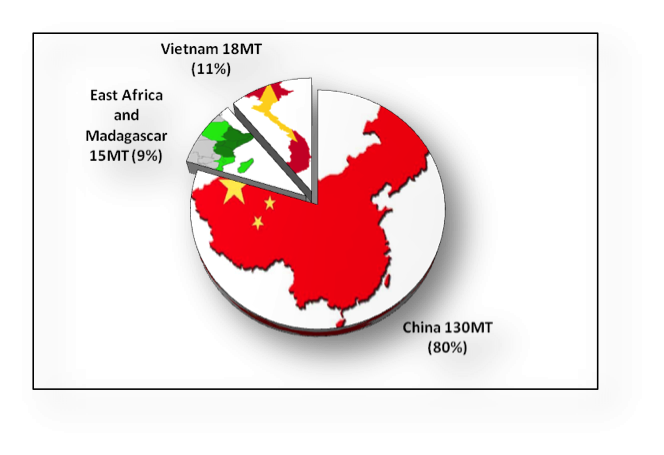
Artemisinina, el ingrediente clave en el fármaco anti-malaria más efectivo en el mundo, se extrae de la Artemisia annua, conocida también como ajenjo dulce. Hoy la industria farmacéutica obtiene la artemisinina natural de miles de familias campesinas en Asia y África.
Enviado por ETC Staff el
Enviado por ETC Staff el
Enviado por ETC Staff el
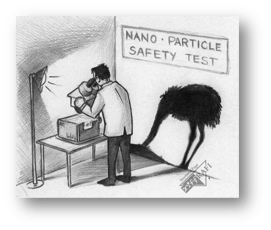
So-called “green technology” is now a major feature of the Rio+20 “green economy” vision. G-77 countries are, understandably, focused on facilitated access to useful technologies that can contribute to sustainable development; the best way to make sure the right technologies are transferred to the right places in the right way is to subject them to meaningful assessment. An emphasis on the positive potential of new technologies requires a concomitant emphasis on a strengthened global, regional and national capacity to monitor and assess technologies. Anything less will incite distrust and invite disaster. Powerful new technologies (such as nanotechnology, synthetic biology and geoengineering) are being proposed and promoted without prior evaluation and no regulation. If technology assessment is deemed too costly or time-consuming, we are likely to find that the cost of not assessing technologies is even greater.
Enviado por ETC Staff el
It's not just that we are facing "something new", we are facing "something else". The speed, breadth and depth of technological change is out-pacing and out-scoping policymakers. Since 1992, the convergence of technologies (living and inert) at the atomic - or nano - scale is adding new dimensions to the nature of technological transformation. Governments need global tools to respond to "something else". Find in this briefing ten technology leaps making the case for prioritizing Technology Assessment at the UN.
Enviado por ETC Staff el

Rio +20 can call for a UN-level technology facility (either combining or separately addressing the need for technology transfer and technology assessment), the details of which can be scheduled for final negotiation in the follow-through to the conference. Grounded in the Precautionary Principle, the facility would have the institutional capacity to identify and monitor significant technologies, including an evaluation of the technologies’ social, economic, cultural, health and environmental implications. Assessments would be completed before a new technology is released.
Enviado por ETC Staff el

Clean green technologies are at the center of the many special reports leading to Rio+20. Understandably, governments have focused on access to “know-how.” Since 1992, however, costly, resource-wasting experience has taught that “know-how” must be accompanied with “know-what” – assessment of the technology choices available – and “know-why” – a participatory analysis of socioeconomic and environmental needs a technology is to address.

Para saber más sobre el Grupo ETC o para contactarnos.
