Recent content

Expertos alertan sobre la amenaza de una crisis alimentaria mundial a causa del bloqueo del tráfico de fertilizantes y combustible en el estrecho de Ormuz

Un tercio de los fertilizantes sintéticos se transportan por el estrecho de Ormuz, junto a un cuarto del comercio marítimo mundial de petróleo, dos insumos fundamentales para la cadena productiva agroindustrial.

Según expertos del Grupo ETC, la vulnerabilidad y fragilidad del modelo dominante podría impulsar un alza en los precios de los alimentos, lo que implicaría una crisis alimentaria global. Por ello, los investigadores hacen un llamado urgente para fortalecer los sistemas alimentarios locales basados en la soberanía alimentaria y la agroecología. 

Experts warn that Strait of Hormuz fertilizer and fuel blockage could lead to a global food crisis

One third of synthetic fertilizers and one quarter of the world’s seaborne oil trade pass through the Strait of Hormuz every day - two essential inputs for the industrial food chain.
The escalating conflict in the Middle East is setting alarm bells ringing once again, and the closure of the Strait of Hormuz is already shaking global trade. Food production and prices could be next.


According to experts from ETC Group (Action Group on Erosion, Technology and Concentration), the commercial food model is so vulnerable that this blockage could drive up food prices, leading to a global food crisis. Researchers are therefore issuing an urgent call to strengthen local food systems based on food sovereignty and agroecology.

Grain Traders, Greed and Oligopoly Power

New research confirms that ag commodity traders sit at the pinnacle of the industrial food chain, influencing how, where and when a staggering volume of commercially traded food is grown, who grows it and under what conditions.

The full report and a summary version can be downloaded below.

Art: @andre_m_medina

---

Agricultural Commodity Traders are complex, highly diversified global firms that operate in all phases of industrial food production and trade, from origination and storage to processing, marketing, financing and investment, and risk management. 

What does data justice mean for African small-holder farmers?

A critical analysis of biodigital technologies and their expanding role in food and agriculture. Central to the authors' argument is the question of who ultimately stands to benefit from this so-called “fourth agricultural revolution."
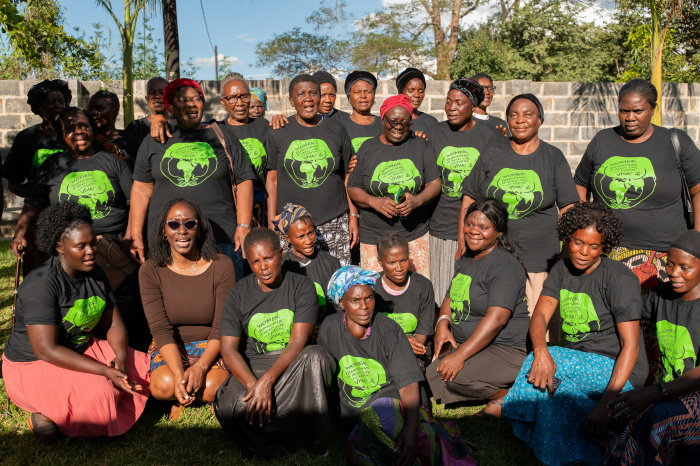
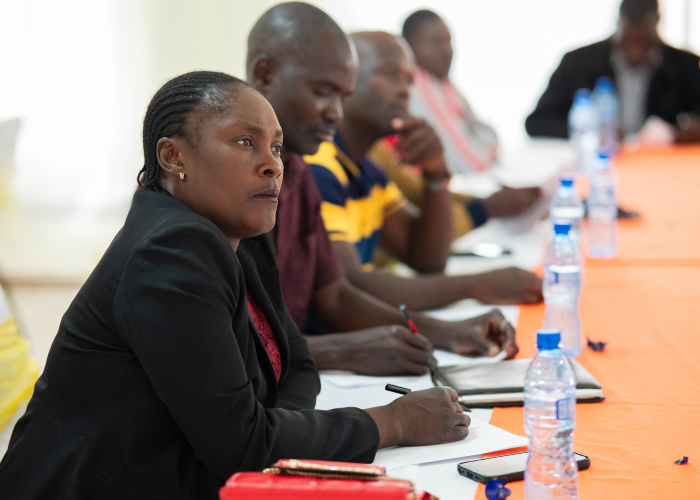
Participants engaging in the “Narratives of Power Building” session, exploring perceptions of technological power and progress in relation to Africa’s food systems

This article was written by Matthew Canfield, Sabrina Masinjila, Barbara Ntambirweki, and was originally published by Agroecology Now. Central to the authors' argument is the question of who ultimately stands to benefit from this so-called “fourth agricultural revolution.” They contend, first and foremost, that data justice must be grounded in the lived experiences and livelihoods of food producers.

AI's Large Looting Models? The Emerging Generative Biology Stack as the Next Frontier of Biopiracy

Generative Biology (GenBio) is the use of generative AI to redesign genomes, proteins, RNA and metabolic pathways. Promoted as a transformative solution for health, food, and climate challenges, its greatest value may lie in serving the AI industry itself

This report sheds light on an emergent field: Generative Biology (GenBio), the application of generative AI to redesign genomes, proteins, RNA, and metabolic pathways. GenBio is expanding at extraordinary speed, propelled by Big Tech and venture capital, with pharmaceuticals as its primary market and growing applications across agriculture, materials, and energy.

Commons to Code: How Platforms Rewire Agriculture and Reshape Power

This case study examines the rise of digitised, data-dependent agriculture, focusing on Bayer's Climate FieldView as a prime example of how agribusiness and technology companies are reshaping food systems

This study maps the flow of agricultural data, from data generation on farms to storage, processing and monetisation, showing how each stage is integrated into infrastructures and contractual regimes controlled by companies. Through this flow, farmers' practices, environments and knowledge are translated into private data flows, reinforcing platform lock-in, algorithmic governance and financialisation.

This case study is part of a research collaboration between ETC Group and IT for Change, supported by the Center for Global Digital Justice. 

Ecuador, genocidio en Gaza, Nyéléni: las luchas de los pueblos en tiempos oscuros

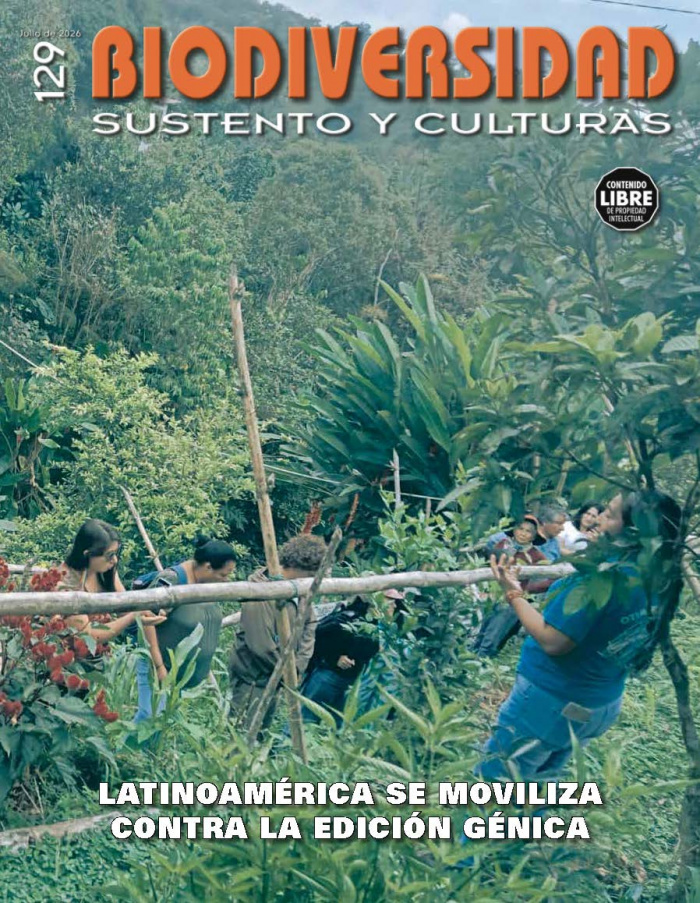
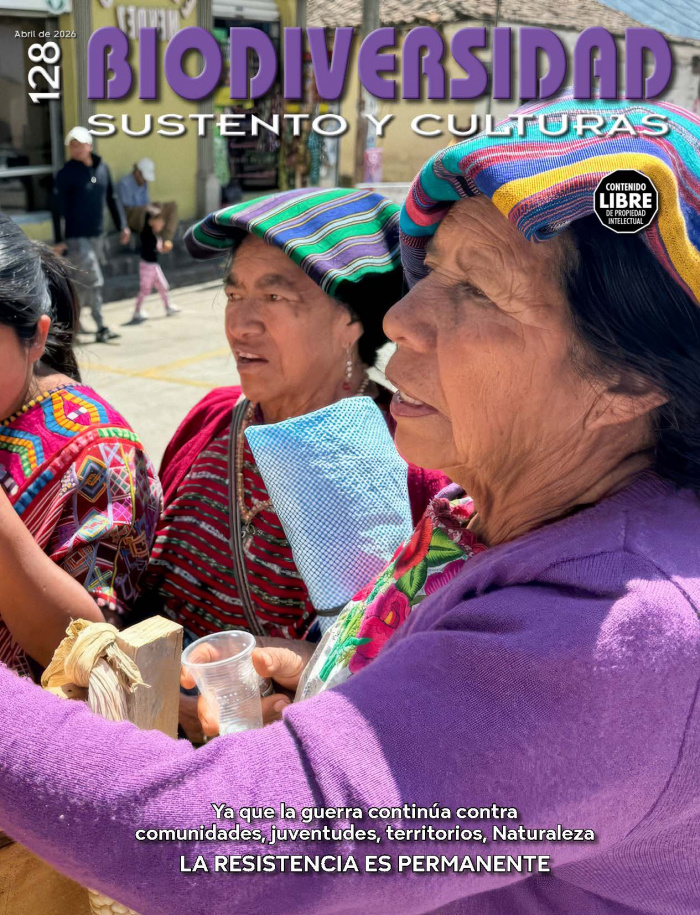
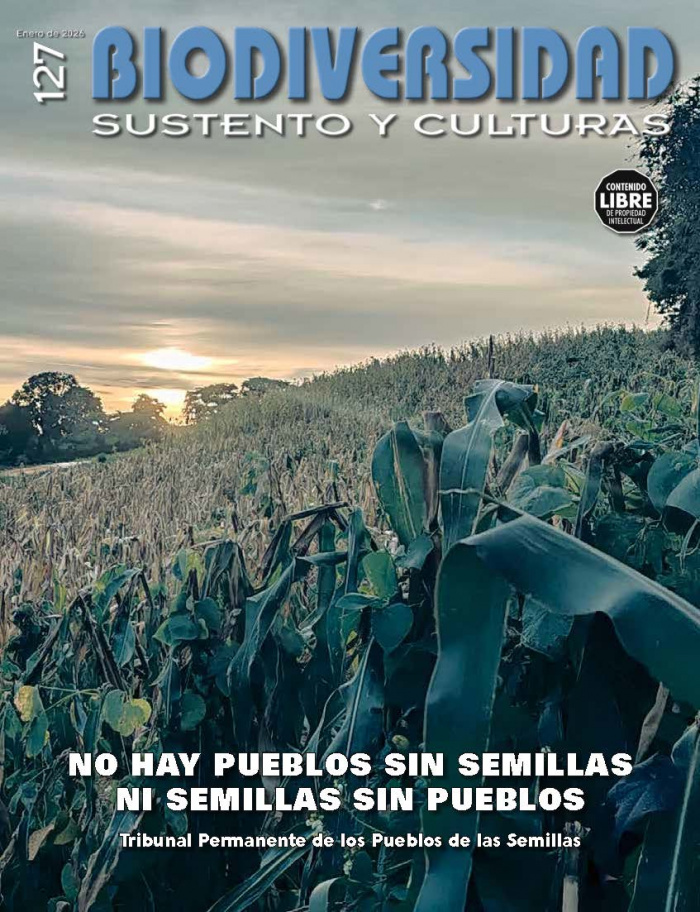
Biodiversidad, sustento y culturas 126

En este número de Biodiversidad, sustento y culturas, el editorial resalta: “Seguiremos entregando información veraz, resaltando los miles de ejemplos de lucha valiente que los pueblos y sus organizaciones continúan desplegando, desenmascarando las formas de acción del capital trasnacional y la violencia criminal, apoyando las muchas formas de resistencia que hoy se construyen. Los tiempos son oscuros, pero el futuro sigue siendo nuestro."


Nyéléni: apuesta por la esperanza

Impresiones del Grupo ETC en Kandy

El proceso Nyéléni, nacido hace casi dos décadas
como una confluencia de movimientos campesinos,
indígenas, feministas y urbanos, ha vuelto a encontrarse,
esta vez en Kandy, Sri Lanka, para dar un paso más:
acordar una Agenda Política Común que articule luchas
diversas frente a las múltiples crisis del capitalismo global.
Esa agenda, lejos de ser un listado de demandas, se
constituye en un mapa político que expresa la madurez
de un movimiento internacional que no se limita a resistir,
sino que imagina y construye alternativas sistémicas.

Páginas

Suscribirse a Recent content