
Submitted by Ronnie Hall on
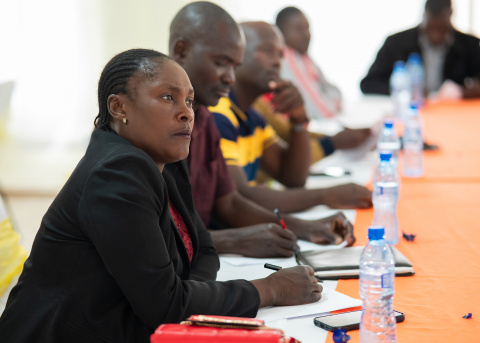
Chingola District, Copperbelt Province, Zambia, 15–16 April 2026
Chingola District, in the Copperbelt District in Zambia, lies at the convergence of two of the most consequential global forces of the twenty-first century: the rapid expansion of digital technology and artificial intelligence (AI), and the accelerating extraction of critical minerals required to sustain that expansion. As global demand for these technologies intensifies, so does the pressure on the communities living above the ore deposits.
This technology assessment engaged smallholder farmers from Kakalo Farming Block, pollution-affected residents of Shimulala and Chabanyama, civil society organisations, media representatives, and district-level government officers across two days of participatory inquiry. Its findings reveal a consistent and deeply troubling pattern: communities in Chingola are bearing the direct costs of global technological expansion through environmental contamination and community health impacts, displacement from productive farmland, opaque and inadequate compensation, and systematic exclusion from governance decisions while receiving negligible share of the economic benefits that extraction generates.
It documented significant governance failures at multiple levels. Environmental regulation is under-resourced and insufficiently independent. Compensation processes are opaque, inconsistently implemented, and systematically biased against community interests. The Lobito Corridor, a flagship investment in critical mineral infrastructure, has been advanced without meaningful community participation or transparent benefit-sharing commitments. And the digital and AI technologies that are reshaping the mineral extraction landscape are being deployed without any community knowledge of, or participation in, the governance of the data and systems involved.
Perhaps most strikingly, the assessment found that this exclusion extends beyond communities themselves. Local government officers, CSOs, and elected representatives alike demonstrated significant knowledge gaps about digitalization, AI, and the policy frameworks designed to govern them. This represents a structural barrier to accountability that cannot be addressed by communities alone.
The path forward requires coordinated action across government, civil society and communities: to close information gaps, strengthen regulatory enforcement, establish accessible grievance mechanisms, and build the CSO and community capacity needed to participate meaningfully in an increasingly digitalised resource governance landscape.
This report makes specific, actionable recommendations to national and district government, civil society organisations, and communities. Central among these are: the immediate public disclosure of the Lobito Corridor EIA and reform of the affected farmer register; decentralisation of ZEMA with mandatory community notification obligations; establishment of an accessible environmental court with jurisdiction over pollution compensation disputes; binding data sovereignty regulations governing AI-generated exploration data; and sustained investment in community and civil society capacity to engage with an increasingly digitalised resource governance landscape.
Chingola community has demonstrated extraordinary resilience and organisational capacity in the face of historic and ongoing injustice. What they require is institutional support commensurate with the scale of the challenges they face.
This assessment was undertaken by Africa Technology Assessment Platform (AfriTAP), Zambia Alliance for Agroecology and Biodiversity (ZAAB) and Care for Nature Zambia
Photo: Sebastian Tembo, Seb Visuals
| Attachment | Size |
|---|---|
 final_chingola_report_april_2026.pdf final_chingola_report_april_2026.pdf | 457.79 KB |