
Submitted by Ronnie Hall on
Mpongwe District, Copperbelt Province, Zambia, 17–18 April 2026
This Technology Assessment Report presents the findings of a two-day participatory assessment conducted in Mpongwe District, Copperbelt Province, Zambia, designed to examine how the convergence of digital technologies, artificial intelligence (AI), and agro-chemical innovations is reshaping farming systems, rural livelihoods, land use patterns, and environmental sustainability across one of Zambia's most strategically significant agricultural regions.
The findings indicate that agricultural digitalization in Mpongwe District is proceeding at a speed and pace faster than the regulatory, institutional, and community capacity needed to govern it equitably. Currently the deployment of digital tools concentrates benefits among corporate interests while pushing the risks of data exploitation, input dependency, displacement, and knowledge loss onto smallholder farmers, particularly women and youth. Without targeted intervention at the levels of policy, governance, and community empowerment, the digital transformation of agriculture risks deepening inequality across Zambia.
Mpongwe District sits within Agro-Ecological Zone II (AEZ II), widely regarded as Zambia's most agriculturally productive belt, characterised by reliable rainfall, fertile soils, and significant smallholder farming activity alongside expanding large-scale commercial operations. The district represents a critical flashpoint where the promises of agricultural modernisation intersect with deep-seated structural vulnerabilities including land insecurity, digital exclusion, and the erosion of indigenous farming knowledge.
The assessment was undertaken against a backdrop of accelerating agricultural digitalization at both national and sub-national levels, including the rollout of the Zambia Integrated Agricultural Management Information System (ZIAMIS) — a government-managed digital registry linking farmer identity, subsidy entitlements, and input procurement. As digital platforms increasingly serve as a gateway to access government services and markets, questions about data governance, corporate power, and farmer agency have become urgent but remain largely unaddressed in policy frameworks.
Five interrelated themes emerged, each pointing to the same underlying tension: digital and technological change is advancing faster than the governance and community capacity needed to manage it equitably.
The first and most foundational concern is a significant digital literacy gap. Smallholder farmers are broadly aware of digital tools but lack substantive understanding of AI systems, data governance principles, and their rights as data subjects. This gap is wide and largely unaddressed by current agricultural extension services.
Closely related is the question of data governance within ZIAMIS and similar platforms. Farmers are enrolled in digital registries that link subsidy access to the adoption of commercial inputs, often without meaningful informed consent. There is no clear or accessible information on who controls farmer data, how it is shared, or what legal protections apply a situation that leaves communities exposed to exploitation they cannot see or challenge.
Corporate dependency represents a third and growing concern. Agribusiness companies operating in the district actively promote hybrid seed varieties that require purchase every season, systematically eroding seed sovereignty. Digital platforms are accelerating this dependency by embedding commercial input supply chains into the architecture of subsidy and market access systems, making it structurally difficult for farmers to choose otherwise.
Underlying all of these dynamics is land tenure insecurity. The majority of smallholder farmers hold customary land rights that are unregistered or legally ambiguous, preventing access to formal credit, discouraging long-term investment in soil health, and leaving communities vulnerable to displacement by commercial interests seeking large agricultural landholdings.
The fifth finding concerns the erosion of agroecological practice. Indigenous seed systems, traditional intercropping methods, and organic soil-building techniques are in measurable decline, displaced by structural incentives embedded in subsidy programmes and digital market platforms that consistently reward monoculture production using hybrid seeds and synthetic inputs.
Finally, the assessment identified significant governance gaps at district and provincial level. Government officers lack clear guidance on digital data policy and Free, Prior and Informed Consent (FPIC) obligations as they apply to farmer data.
This report proceeds to detailed analysis of each finding area, followed by specific recommendations addressed to national government, district authorities and civil society organizations.
The assessment was undertaken by Africa Technology Assessment Platform (AfriTAP), Mizu Eco Care and the Zambia Allicance for Agroecology and Biodiversity (ZAAB).
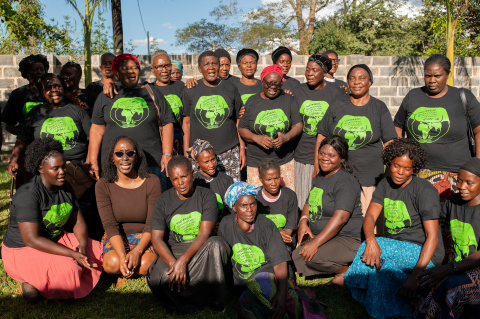
Photo: Sebastian Tembo, Seb Visuals
| Attachment | Size |
|---|---|
 final_mpongwe_report.pdf final_mpongwe_report.pdf | 349.94 KB |