Recent content

Bioprospecting/Biopiracy and Indigenous Peoples

Bio-Prospectors Hall of Shame...or Guess Who's Coming to Pirate Your Plants?! Pros and Cons of Bilateral Bioprospecting Agreements

ISSUE: Biodiversity prospecting is the exploration, extraction and screening of biological diversity and indigenous knowledge for commercially valuable genetic and biochemical resources. Bilateral bioprospecting agreements are sanctioned by the multilateral Convention on Biological Diversity. In the vast majority of cases, however, commercial bioprospecting agreements cannot be effectively monitored or enforced by source communities, countries, or by the Convention, and amount to little more than "legalized" bio-piracy.

Sixty-Five Years of the U.S. Plant Patent Act (PPA)

Has the PPA Benefitted Society? The PPA's Relevance for the South.

RAFI examines plant utility patents granted by the US Patent and Trademark Office from 1985 through mid-1995. Utility plant patenting is a threat to world food security; exceedingly broad patents on biological materials and the processes used to manipulate them are "locking up" new plant biotechnologies in the hands of a small number of corporations.

Biopiracy Update: A Global Pandemic

Cases from Thailand, Gabon, Ecuador, and Peru

This issue looks at biopiracy case studies around the world including super-sweet brazzein from Gabon; the Foundation for Ethnobiology in Thailand; Peruvian indigenous peoples' rejection of Washington University's ICBG project; and more. A detailed list of bioprospecting and biopiracy activities (as of early 1996) is also included.

También en ésta edición...Informe sobre la biopiratería

Casos de Tailandia, Gabon, Ecuador, y Perú Lista de biopiratería/bioprospección

Este informe analiza estudios de casos en varias partes del mundo, entre ellos, la brazzeina super-dulce de Gabón, la Fundación para la Etnobiología en Tailandia, el rechazo de pueblos indígenas al proyecto ICBG de la Universidad de Washington en Perú y otros. Se incluye también una lista detallada de actividades de biopiratería y bioprospección (hasta 1996).

Volume 2, #2 The Hidden Hot Zone

An Epidemic in Two Parts

Phytophtora infestans, also known as the "late potato blight" is the fungus that caused the Great Potato Famine of 1845-49. One hundred and fifty years later, the blight is back again in new and deadlier forms. Will governments muster the political will to wage a true war against hunger and food insecurity? A nine page document.


Utility Plant Patents: A Review of the U.S. Experience (1985 - July, 1995)

Staking Ever-Broader Claims on Entire Species and Important Traits; Implications for the South

A detailed examination of the impact of the US Plant Patent Act. Passed by the US Congress in 1930, the PPA is the world's oldest sui generis intellectual property system designed for the patenting of life forms.

Gene Hunters in Search of "Disease Genes" Collect Human DNA from Remote Island Populations

Indigenous Peoples Assert their Intellectual Integrity; Call for Life forms Patent-Free Zone in the Pacific; Life Forms Patent Update

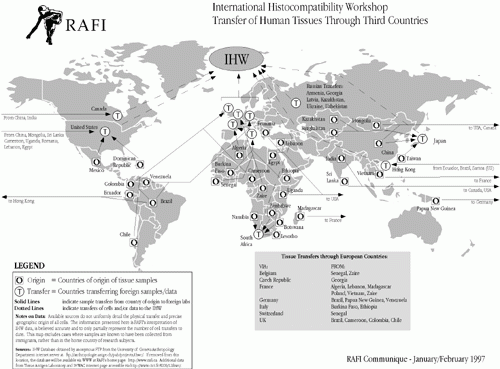
In the race to identify patent and commercialize human genes, scientists and their corporate partners are collecting DNA samples from remote island populations in the South Atlantic, Micronesia and the east China sea. This issue highlights Sequana's search for the "asthma gene" derived from DNA samples collected from the people of Tristan da Cunha.

Genetically Engineered High-Lauric Rapeseed (Canola): What Threat to Tropical Lauric Oil Producers?

Genetically Engineered Designer Oilseeds: What's in the Pipeline? Coconut: Pillar of the Economy or Sunset Industry for the Phillipines?

In 1995, Calgene commercialized a genetically modified rapeseed that produces the lauric fatty acid - a product derived traditionally from tropical oils Will Calgene's high-lauric rapeseed displace markets for coconut and palm kernel oil producers in the tropics?

Volume 1, #5 RAFI Challenges W.R. Grace (Agracetus) "Species Patent" on Soybeans at European Patent Office

This document reviews the year-long controversy over Agracetus's species-wide patent on all genetically modified soybean varieties. In April 1994, with the support of 18 CSOs worldwide, RAFI announced it would formally challenge the patent at the European Patent Office. A summary of RAFI's opposition statement appears here. A 14 page document.

Volume 1, #4 Pirating Medicinal Plants:

COPs... and Robbers... Transfer-Sourcing Indigenous Knowledge (with Indigenous Peoples' Biodiversity Network)

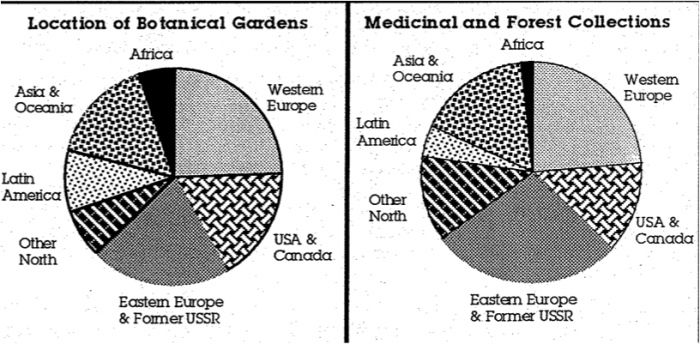
Pharmaceutical companies dont want to study rare plants. They want to test the most - commonly used species. The valuable medical plants are those with the longest track record in the most location. In a survey of almost 1.000 medical plants used around the world, most of the pharmacologically - (and commercially) interesting species are employed in more than one community, and often, in several countries.  This is great news for BioPirates, who can move benevolently from place to place in search of the best deal.

People, Plants, and Patents

The impact of intellectual property on trade, plant biodiversity, and rural society

One of the most eagerly awaited publications in the plant genetic resources (PGR) community. - Diversity 1994, 10(2), 25

The recent GATT agreement and the Biodiversity Convention have moved intellectual property rights to the centre of South-North relations.

Decisions about intellectual property, particularly for plant life, have major implications for food security, agriculture, rural development, and the environment for every country in the South and the North. For the South, in particular, the impact of intellectual property on farmers, rural societies, and biological diversity will be profoundly important.

* Patents granted for genetically engineered cotton could profoundly influence the future of a $20 billion crop critical to many national economies in the South.
* Farmers' organizations in Andean countries believe that patents granted for two varieties of coloured cotton do not recognize the major contribution to the new product by indigenous communities in South and Central America.

Un brevet pour la vie

L'aboutissement recent de la negociation du GATT et la signature de la Convention sur la diversite biologique ont place les droits de propriete intellectuelle au premier plan des relations Nord-Sud.
Les decisions prises en la matiere, notamment en ce qui a trait aux ressources du regne vegetal, ont d'importantes implications pour la securite alimentaire, l'agriculture, le developpement rural et l'environnement de tous les pays, au Nord comme au Sud. Pour ces derniers en particulier, l'incidence de la propriete intellectuelle sur les agriculteurs, les societes rurales et la biodiversite revetira une extreme importance.

Páginas

Suscribirse a Recent content