Recent content

Ganadores de los Premios Capitán Garfio y Cog 2008

La Coalición contra la Biopiratería exhibe a los Garfios y celebra a los Cog

Bonn, Alemania - La Coalición contra la Biopiratería celebró la ya tradicional entrega de los Premios Capitán Garfio y Premios Cog en el marco de la 9ª Conferencia de las Partes al Convenio de Diversidad Biológica (COP9) en Bonn, Alemania, el 21 de mayo de 2008.

Hollow Victory: Enola Bean Patent Smashed At Last (Maybe)

The infamous Enola bean patent, first denounced by ETC Group eight years ago as a textbook case of biopiracy, was struck down yesterday (April 29, 2008) by the U.S. Patent & Trademark Office in Washington, D.C. One of the most controversial plant patents in history, the effort to defeat it was unprecedented because it involved the United Nations and international plant breeding institutes.

Victoria hueca: Patente sobre el frijol Enola anulada finalmente (esperemos...)

La infame patente del frijol Enola, denunciada por primera vez por el Grupo ETC hace ocho años como un cínico ejemplo de biopiratería, fue anulada el 29 de abril del 2008 por la Oficina de Patentes y Marcas Registradas de Estados Unidos. Siendo una de las patentes sobre plantas más controvertidas de la historia, su derrota no tiene precedentes, pues involucró a naciones tanto como a organizaciones de la sociedad civil e instituciones internacionales de fitomejoramiento.

Ahoy, Mates!

The Coalition Against Biopiracy today calls for nominations for the Fifth Captain Hook Awards

www.captainhookawards.org

What's the most scandalous case of biopiracy[1] in your country? Who's ripping off indigenous knowledge in your community? Which privateer is most egregiously pillaging the global commons for profit? Who's monopolizing your genes or patenting your plants?

Nominate your least favorite pirate for a 2008 Captain Hook Award. All outrageous achievements in biopiracy deserve recognition!

Nominate your most admired biopiracy-resistor for a 2008 Cog Award. All those who have fought off biopirates, defeated predatory patents or otherwise foiled the nefarious plots of fiendish privateers deserve recognition. (Cog Awards are so-named because cogs were ships designed to repel pirate attacks.)

¡Alerta, colegas!

La Coalición contra la Biopiratería convoca a la 5a Entrega de Premios Capitán Garfio

¿Cuál es el caso más escandaloso de biopiratería en su país? ¿quién saquea el conocimiento indígena en su comunidad? ¿Quién privatiza descaradamente los bienes comunes para lograr ganancias privadas? ¿Quién monopoliza sus genes o patenta sus cultivos?

Nomine a su pirata más odiado para los Premios Capitán Garfio 2008. ¡Necesitamos conocer los peores casos de biopiratería!

Special Report on Human Genomics

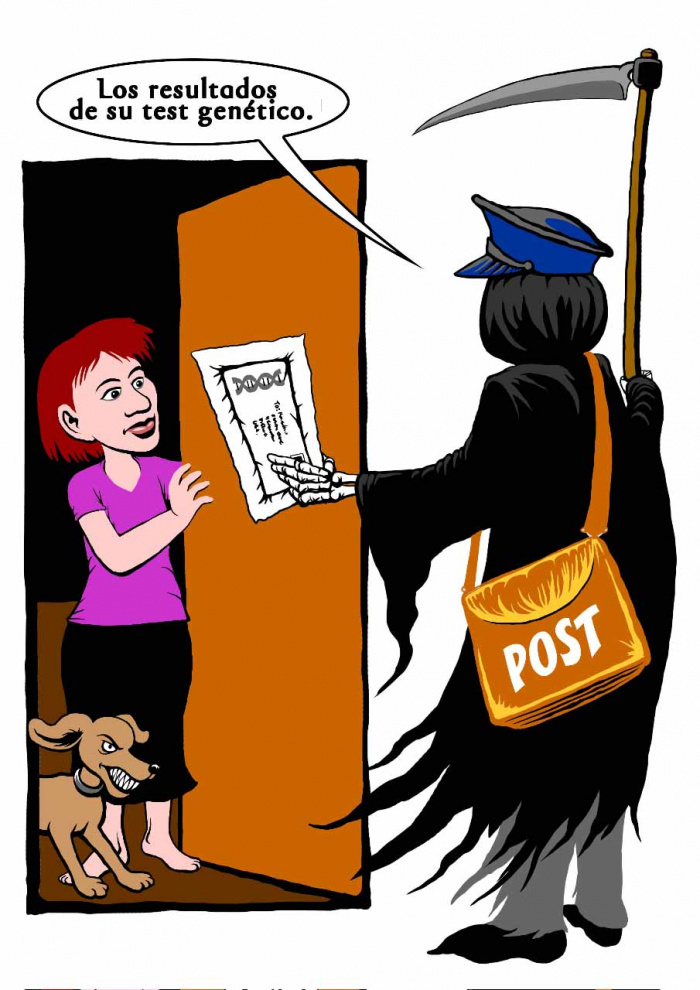
Direct-to-Consumer DNA Testing and the Myth of Personalized Medicine: Spit Kits, SNP Chips and Human Genomics

The topic of this report is the burgeoning Direct-to-Consumer (DTC) genetic testing industry, which is promising consumers a guidebook for maintaining health as well as a gene-based horoscope predicting future illness.

Svalbard's Doomsday Vault

The Global Seed Vault Raises Political/Conservation Debate

The swarm of media attention focusing on today's opening of the Global Seed Vault in Norway's high Arctic may overshadow an even bigger news story. The Norwegian government pledged to give 0.1% of money spent on commercial seed sales to support Farmers' Rights, and challenged other governments to do the same. The critical message is that even the most secure gene bank storage is not the ultimate solution. Governments must provide support to farmers to improve local conservation and breeding, and help them obtain access to far away seed accessions.

El cartel del a soberanía alimentaria

Puesto que los gobiernos no pueden gobernar, las principales instituciones involucradas en la alimentación y la agricultura se encuentran en graves problemas. A menos que gobiernos y agencias internacionales cooperen, estas instituciones quedarán dañadas irreparablemente y las multinacionales de los agronegocios y los capitalistas filantrópicos seguirán aprovechando el vacío de poder ocasionado por la OCDE.

El Instituto Venter construye la secuencia más larga de ADN artificial (que no funciona)

“No importa lo largo, sino lo inteligente que sea”, advierte el Grupo ETC

El Grupo ETC renovó su demanda de una moratoria a la liberación y comercialización de organismos artificiales, enfatizando que no hay regulación ni debate social en torno a la biología sintética. La insistencia en la moratoria ocurre en el contexto del anuncio que hiciera el equipo de investigación de J. Craig Venter, de haber logrado sintetizar artificialmente un genoma del tamaño del de una bacteria, utilizando secuencias de ADN ordenadas por correo.

Venter Institute Builds Longest Sequence of Synthetic DNA (that Doesn’t Work)

“It’s not how long – but how wise” cautions ETC Group

ETC Group renewed its call for a moratorium on the release and commercialization of synthetic organisms, asserting that societal debate on the oversight of synthetic biology is urgently overdue. The renewed call came as J. Craig Venter’s research team announced that it has constructed a bacterial-length synthetic genome in the lab using mail-order synthetic DNA sequences. They’ve named the synthetic genome, Mycoplasma genitalium JCVI-1.0, and it’s similar to its counterpart in nature, a genital bacterium with the smallest known genome of any free living organism. The announcement is not breaking news because the work had been previously reported, but the details were published today in Science.

La bóveda del fin del mundo en Svalbard

Asunto: Con la inauguración de la Bóveda Global de Semillas en el Alto Ártico en Noruega el pasado 26 de febrero se cierra una campaña de 30 años por el establecimiento de un Banco Mundial de Genes, y se abre un debate muy necesario sobre el estado de los recursos genéticos del mundo y la necesidad de apoyar las estrategias de conservación en el campo.

Too small to be beautiful? Organic Pioneer says No to Nano

Too small to be beautiful? Organic Pioneer says No to Nano
Inglés

Now that you can drive your ‘nano’ car, listening to your ipod ‘nano’ while wearing ‘nano’ sunscreen and ‘nano’ clothing, the UK’s largest organic certifier has just introduced the perfect nano-antidote - a ‘nano-free’ standard for consumer products. The Soil Association – one of the world's pioneers of organic agriculture announced today that it is has banned human-made nanomaterials from the organic cosmetics, foods and textiles that it certifies.

Food’s Failed Estates = Paris’s Hot Cuisine

Food Sovereignty – à la Cartel?

Because governments have failed to govern, the leading multilateral institutions involved in food and agriculture are in deep trouble. Unless governments and international secretariats cooperate, these institutions will be irreparably damaged and the power vacuum OECD states have created over recent decades will continue to be filled by multinational agribusiness and the new philanthro-capitalists.

Organic Pioneer Says No to Nano

ETC Group Welcomes World’s First ‘Nano-free’ Standard

Now that you can drive your ‘nano’ car, listening to your iPod ‘nano’ while wearing ‘nano’ sunscreen and ‘nano’ clothing, the UK’s largest organic certifier has just introduced the perfect nano-antidote – a ‘nano-free’ standard for consumer products. The Soil Association – one of the world’s pioneers of organic agriculture – announced today that it is has banned human-made nanomaterials from the organic cosmetics, foods and textiles that it certifies. (1)

"Failure as Usual" Food Summit

Ciao FAO: Another "Failure-as-Usual" Food Summit

Contrary to the opinion of many, June's Food Summit actually did something. It signaled the beginning of the end for the multilateral system as we know it. Over the next six months the food emergency - and the international institutions designed to address it - could get worse.

Ciao FAO, otra cumbre para revisar los "errores de siempre"

Traducción libre del Grupo ETC sobre la Declaración de la Conferencia de Alto Nivel sobre Seguridad Alimentaria Mundial: Los retos del Cambio Climático y la Bioenergía

Asunto: Durante la Cumbre Mundial de la Alimentación que tuvo lugar del 3 al 5 de junio, los gobiernos se las arreglaron para reunir fondos suficientes para mantener a raya las rebeliones por alimentos durante algunos meses, pero todos los problemas de fondo y de largo plazo permanecen sin resolver. En Roma, los gobiernos optaron por un “remedio tecnológico” mítico, encabezado por los agronegocios en colaboración con la Fundación Gates y otros capitalistas filantrópicos que usurpan el sistema multilateral. También vemos una desviación del poder, que se aleja de las muy calumniadas agencias con sede en Roma hacia Naciones Unidas en Nueva York y las Instituciones Breton Woods en Washington. Las reuniones de alto nivel que ocurrirán en el último cuarto de 2008 podrían impactar decisivamente la capacidad del mundo para responder a la actual emergencia alimentaria.

The World Torpedoes Ocean Fertilization: End of Round One on Geo-Engineering

191 countries agree to a landmark moratorium on ocean CO2 sequestration

As the ninth meeting of the U.N. Convention on Biological Diversity (CBD) draws to a close in Bonn, Germany the world’s governments are set to unanimously agree a wide-ranging “de-facto moratorium” on ocean fertilization activities. This first-ever global decision on a geo-engineering technology should spell the end of commercial plans to sequester carbon dioxide by dumping nutrients into the open ocean. Nonetheless, one ocean fertilization company, Climos Inc. of San Francisco, appears to be moving full steam ahead in defiance of international consensus.

“The message from the UN Biodiversity Convention is clear. The world does not want commercial ocean fertilization and companies like Climos should be looking for another occupation,” says Pat Mooney, Executive Director of ETC Group, who is in Bonn at the negotiations. “Ocean fertilization could lead to toxic tides, lifeless waters and disrupted ecosystems and livelihoods. There is unanimous agreement among the 191 countries here that it is absolutely the wrong way to tackle climate change.”

Les appareils défaillants de l’alimentation = cuisine branchée de Paris Souveraineté alimentaire – à la cartel?

Souveraineté alimentaire – à la cartel?

Parce que les États n’ont pas su gouverner, les grandes institutions multilatérales de l’alimentation et l’agriculture sont dans le pétrin. Si les États et les secrétariats internationaux ne coopèrent pas, ces institutions subiront des torts irréparables : les multinationales de l’agroalimentaire et les nouveaux philantro-capitalistes vont continuer de combler le vide du pouvoir créé par les États membres de l’OCDE depuis quelques décennies.

Páginas

Suscribirse a Recent content