Recent content

Using Conservation for Synthetic Biology.

Using Conservation for Synthetic Biology.

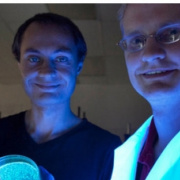
Frankly it was all a set up. In the delightfully romantic setting of an old Cambridge college in springtime, complete with free drinks and delicious food, the organizers of last weeks 'Future of Nature' Conference smiled on conspiratorially as their contrivances to introduce two awkward strangers played out over 3 days.

The strangers in this case were not so much boy-meets-girl as naturalist-meets-geek and what they purportedly had in common was biology. The Future of Nature had been billed as an encounter between the synthetic biology community (biotech scientists practicing an extreme form of genetic engineering that builds artificial organisms) and the conservation biology community who are still trying to hold back the frontier of wildlife destruction for non-engineered nature.

Maíz transgénico de Sudáfrica: imposición en México y Zimbawe

BOLETÍN DE PRENSA

Grupo ETC, Centro Africano para la Bioseguridad,

FoodMattersZimbabwe y CTDT

Johannesburgo, Harare y Ciudad de México 15 de abril de 2013

Nuevas importaciones de maíz transgénico de Sudáfrica a México

Cargamentos no autorizados hacia Zimbawe

En peligro el centro de origen y las formas de vida campesinas del maíz en Mesoamérica y en África

A Mammoth Distraction - Syn Bio and 'De-extinction'.

A Mammoth Distraction - Syn Bio and 'De-extinction'.


The distracting allure of a technofix is a common trick deployed by those pushing risky technologies. Nuclear power we are told might just solve climate change,  GM food could feed the hungry, "DDT is good for you" etc. But the latest eyecatching technofix under discussion at a conference in Cambridge this week is a real dodo: 'Synthetic Biology' we are now told will reverse extinction of species and conserve biodiversity. Really ?

Normalizing Geoengineering as Foreign Aid

Normalizing Geoengineering as Foreign Aid

Climate Drift: Geoengineers have a problem. Computer modeling suggests that blocking solar radiation in the temperate zone (to preserve Arctic ice or to forestall massive methane releases) could cool the Northern hemisphere but its impact could also drift South, creating severe climatic disruptions by dampening down Asia’s monsoon while drying out Africa’s Sahel. Not a popular proposition.

Now, geoengineers may hope they have a solution. A new study in Nature Climate Change[i] by the UK Government’s Meteorological Office suggests that some form of solar radiation management could mitigate the conventional vicissitudes of nature. According to the report, volcanic eruptions north of the equator in the 20th century either contributed to – or caused – droughts along the African equator and further South.

Tunis 2013: If we rely on corporate seed, we lose food sovereignty

World Social Forum Event organized by La Via Campesina, GRAIN and ETC Group

GROWING POWER IN PEASANT SEEDS SYSTEMS: Farmers seeds and struggle against GMOs, AGRA- 2nd Green Revolution. Tunis, March 29.

It has become crucial to defend seeds. In the past 20 or 30 years, what was once seen as normal – peasant farmers growing, selecting, saving and exchanging seeds – has come under attack from corporations seeking to control and commodify the very basis of agriculture.

Normalizando la geoingeniería como ayuda exterior - Inteligencia artificial de la geoingeniería III

Normalizando la geoingeniería como ayuda exterior - Inteligencia artificial de la geoingeniería III

Los geoingenieros tienen problemas: los modelos por computadora sugieren que bloquear la radiación solar en la zona templada del globo (para preservar el hielo del Ártico o evitar liberaciones masivas de metano) podría enfriar el hemisferio norte, pero su impacto podría llegar hasta el sur, creando severos disturbios climáticos como la disminución de los monzones de Asia o sequías totales en el Sahel.

Ayudar con traducciones

El Grupo ETC intenta brindar todos nuestros textos, investigaciones y reportes en inglés y español, y ocasionalmente traducimos los materiales al francés y portugués.

Algunas veces personas o grupos nos contactan pidiéndonos permiso de traducir algún material en otro idioma. Damos las gracias a quienes ofrezcan su ayuda voluntaria con las traducciones, lo único que solicitamos es que mantengan el crédito del Grupo ETC por la autoría del documento. También nos interesa contar con una copia de las traducciones para que podamos usarla en nuestro sitio web.  

Case Study: Ocean Fertilization near Haida Gwaii

Full links and background on the 2012 ocean fertilization scheme by HSRC.

In October 2012 ETC Group uncovered that a commercial geoengineering firm had quietly carried out the world's largest geoengineering deployment to-date (in July 2012). When the news became public as a result of ETC Group's investigations, it caused a wave of concern among scientists, governments, the public and of course the people of Haida Gwaii. HSRC have since said they intend to carry out further ocean fertilization dumps. On this page we have collected some of the background on the Haida Gwaii ocean fertilization episode, how the story was reported, the legal situation, the science and more.

Documento de antecedentes sobre el vertimiento de hierro en Haida Gwaii ocurrido en 2012

Hace 6 años (2007) el Grupo ETC alertó sobre una empresa comercial de geoingeniería llamada Planktos, Inc., la cual comenzó con la navegación en el río Potomac de un navío de investigación con vistas a verter 100 toneladas de nanopartículas de hierro en las aguas de las islas Galápagos. Planktos esperaba generar una elevación en el volumen de plancton por medio de la “fertilización oceánica”, una técnica de geoingeniería dirigida a la captura de carbono en aguas marinas profundas. La “gran idea” consistía en vender bonos de carbono mediante un esquema que Russ George, director ejecutivo de Planktos denominó “más un experimento de negocios que científico”.

Estudio de caso: Fertilización oceánica cerca del archipiélago Haida Gwaii

Vínculos y antecedentes sobre el experimento de fertilización oceánica de 2012 realizado por la Corporación para la Restauración del Salmón Haida.

En octubre de 2012, el Grupo ETC descubrió que una firma comercial de geoingeniería había realizado, de manera oculta, el despliegue de geoingeniería más grande hasta el momento.

Informational Backgrounder on the 2012 Haida Gwaii Iron Dump

Almost six years ago ETC Group blew the whistle on a commercial geoengineering outfit called Planktos, Inc., which was making its way to dump 100 tons of iron nanoparticles into the waters of the Galapagos Islands . Working with allies ETC Group was able to prevent that ocean fertilisation dump. In 2012 however we were less lucky. The same geoengineering entrepeuner, Russ George, suceeded in dumping over 100 tonnes of iron into the Pacific ocean west of Haida Gwaii in Canada, claiming that his actions had prompted a 10,000 square km plankton bloom. This time his new company, The Haida Salmon Restoration Corporation (HSRC), was using millions of dollars in funds from a small indigenous community. Read here the full story of how ETC Group uncovered HSRC's rogue geoengineering scheme and the storm of international concern that ensued.

Geoengineering – The Opium of the People? Pain-killer, Plane-chiller, Plane crasher

Geoengineering – The Opium of the People? Pain-killer, Plane-chiller, Plane crasher

In the first two months of 2013, leading advocates of geoengineering have argued variously that researching geoengineering (as a Plan B to GHG emission cuts) is like helping a cancer patient manage pain while seeking a cure; or, that an accelerating gaggle of executive jets circling the equator could spray enough sulphuric acid in the stratosphere to keep the Earth’s thermostat within bounds; or, that a single island state could thumb its nose at the military might of the major powers and geoengineer the planet to its liking. So much lobbying and still months to go before the IPCC delivers its fifth assessment report – with an anticipated treatment of geoengineering.

Biologie Synthétique, biocarburants et nouvelles technologies : Construire notre capacité d’évaluation des technologies

Atelier: Forum Social Mondial 2013

De nouvelles technologies, à haut risque, allant du très petit (nanotechnologie, biologie synthétique) au très grand (geoingénierie) sont présentement en rapide développement. Promues en tant que solutions miracles, le principe de précaution et leurs potentiels impacts sociaux et économiques sont souvent ignorés dans la course pour leur déploiement. Sans une application stricte du principe de précaution et un processus d’évaluation transparent et participatif, ces technologies pourraient avoir des conséquences désastreuses sur notre planète déjà fragilisée. Pour faire face au déploiement de technologies puissantes, la société civile doit s’organiser et travailler à développer des plateformes d’observation et d’évaluation des technologies.

Date: 
Viernes, Marzo 29, 2013 - De 13:00 hasta 15:30

WSF 2013: Geoengineering: Resisting Climate Manipulation

A side-event at the Climate Space, World Social Forum 2013

Geoengineering – the intentional, large-scale technological manipulation of the Earth’s systems – is another false solution to climate change being pushed from the global North. High-risk and high-tech schemes under development, including blasting reflective particles into the stratosphere, whitening clouds and dumping chemical compounds into the oceans, could have devastating consequences for ecosystems and for the food and water sources for billions of people. States responsible for most of the historic greenhouse gas emissions are pushing for geoengineering as they see it as “the perfect excuse” to continue business as usual – keep emitting CO2 while making new profits selling the geoengineering technologies. No government, industrial sector or billionaires club has the right to own the planet’s thermostat. Geoengineering diverts attention and resources from real solutions to climate change. In this workshop, we will provide a brief introduction to geoengineering technologies before discussing strategies to stop them. Hands Off Mother Earth!

Date: 
Viernes, Marzo 29, 2013 - De 09:00 hasta 11:30

WSF 2013: Synthetic Life, Biofuels and Other New Technologies: Building Peoples' Technology Assessment Capacity

Side-event: World Social Forum, Tunis 2013

New, high-risk technologies, ranging from the very small (synthetic biology, nanotechnology) to the very large (geoengineering), are being rapidly developed. Promoters promise solutions, but the precautionary principle and social and economic impacts are often ignored in the rush to deploy the latest technofix. Without the strict application of the precautionary principle, and a transparent and real participatory way to assess impacts, these new technologies could wreak more havoc on our already fragile planet, battered by reckless and unsustainable forms of production. To deal with the onslaught of ever more powerful technologies, civil society organizations, movements, indigenous peoples and peasant organizations need to self-organize to create Technology Observation Platforms (TOPs).

Date: 
Viernes, Marzo 29, 2013 - De 13:00 hasta 15:30

ETC Group at the World Social Forum 2013

Tunis, Tunisia

ETC Group will be participating at the 3rd World Forum on Science and Democracy and the World Social Forum 2013 that will take place in Tunis, capital city of Tunisia between 23-30 March 2013. Come join us in various activities, workshops and assemblies! We hope to meet you there!

To know more about our side event Geoengineering: Resisting Climate Manipulation, click here.

Date: 
De Sábado, Marzo 23, 2013 - 09:30 hasta Sábado, Marzo 30, 2013 - 19:30

Páginas

Suscribirse a Recent content