Recent content

Hacia una nueva normalidad climática

Hacia una nueva normalidad climática
Español

El trabajo de hacer que algo tan absurdo y con tantos impactos negativos como la geoingeniería suene como una opción normal se allanó significativamente después de la conferencia de Naciones Unidas sobre cambio climático (COP 21) que culminó en París en diciembre de 2015. Fue quizá una de las peores maniobras en esa reunión, porque, además de los riesgos que implica, la mayoría de la gente no advirtió lo que estaba sucediendo...

Contaminación transgénica con premeditación, alevosía y ventaja

Contaminación transgénica con premeditación, alevosía y ventaja
Español

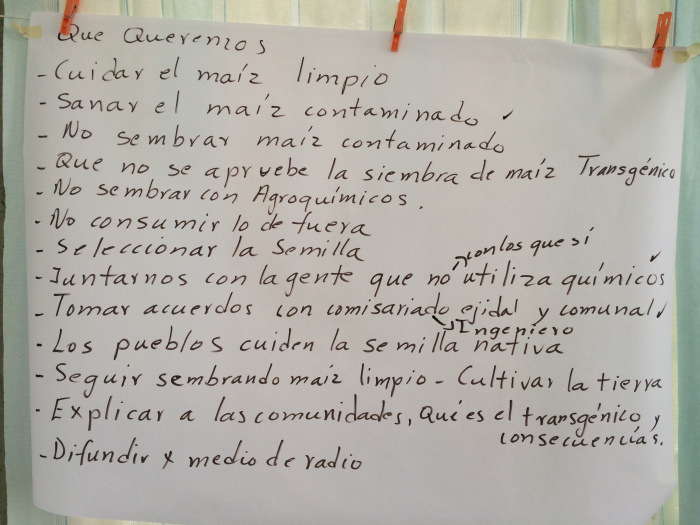
A más de dos años de la suspensión contra la siembra de maíz transgénico en México, las trasnacionales se desesperan y en el alud de argumentaciones de todo tenor –medias verdades, datos fuera de contexto o falseados, mentiras descaradas– Monsanto y Syngenta admitieron que con la siembra de maíz transgénico, habrá contaminación del maíz campesino nativo.

Breaking Bad

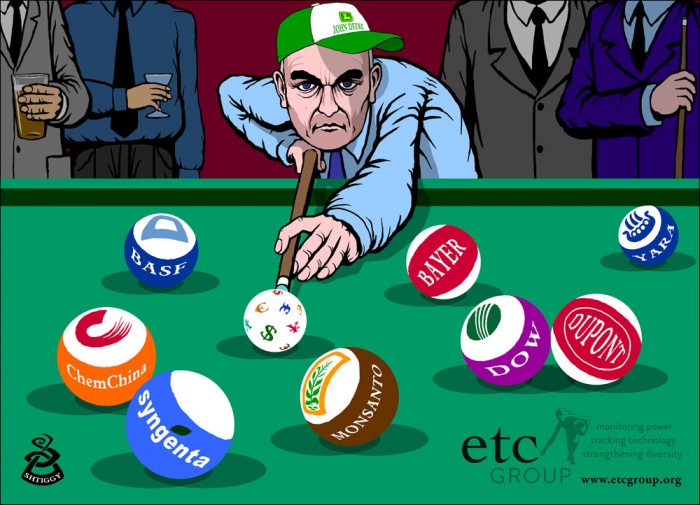
Big Ag Mega-Mergers in Play; Dow + Dupont in the Pocket? Next: Demonsanto?

December 2015. In this new report, ETC Group examines corporate consolidation in four agricultural input sectors: seeds, pesticides, chemical fertilizers and farm equipment. With combined annual revenue of $385 billion, these companies call the shots. Who will dominate the industrial food chain? And what does it mean for farmers, food sovereignty and climate justice?

Issue

El Campo Jurásico de los dinosaurios agrícolas aún no es realidad

El nuevo informe del Grupo ETC explica cómo el Sur global podría bloquear las megafusiones entre agronegocios

Si se consolidan sus nuevas propuestas de fusiones y adquisiciones, las seis más grandes empresas de insumos agrícolas, que concentran el 75% de la investigación y desarrollo globales, podrían reducirse a tres o cuatro. Si Dow y DuPont se unen y logran burlar a los reguladores anti monopolio, la nueva empresa resultante controlará el 25% de las ventas de semillas comerciales y 16% de las ventas de plaguicidas, lo que significa que junto con Monsanto, solo dos compañías controlarían el 51 % de todas las ventas de semillas y una cuarta parte del mercado de plaguicidas.

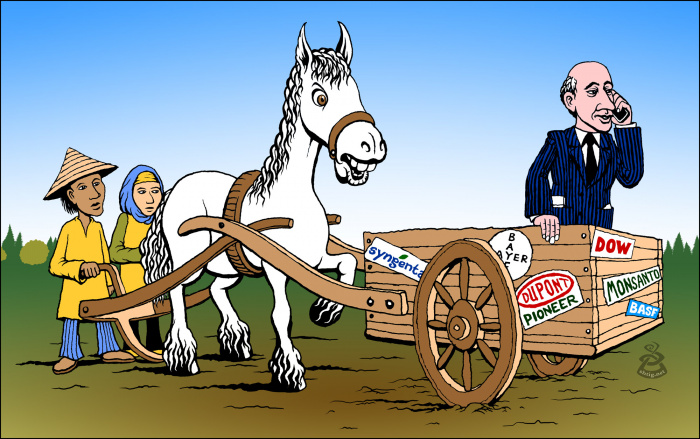
Global Agribusiness Mergers NOT a Done Deal

New ETC Group report, Breaking Bad, shows how Dow-DuPont, Monsanto and Syngenta seed and pesticide deals could be blocked by Global South

The $130 billion Dow-DuPont merger announced last week has rekindled ChemChina’s $44.6 billion bid for Syngenta which, in turn, may provoke a fourth takeover try by Monsanto. If ChemChina prevails, Monsanto is likely to look for a deal with either BASF or Bayer. If they get their way, the world’s Big Six agricultural input companies controlling 75% of global agricultural R&D may be reduced to three or four.

NO a la meta de 1.5°C con geoingeniería

Recolección de firmas

París, 12 de diciembre de 2015

Aparentemente de la nada (o más bien, a partir del humo negro del proceso de la COP21 sobre Cambio Climático), algunos de los responsables históricos más importantes del cambio climático, como Estados Unidos, Canadá y la Unión Europea, han decidido respaldar “una meta muy ambiciosa”: limitar el aumento de la temperatura global a 1.5 grados centígrados. Para lograrlo se necesitaría una drástica reducción de las emisiones de gases comenzando desde ya, pero en el caso de esos países, su intención es otra.

No to 1.5°C with geoengineering!

Sign-on letter

Paris, 11 December 2015

Seemingly out of the blue (or rather, out of the black smog of the UNFCCC process), some of the largest historical culprits for climate change, countries including the United States, Canada and the European Union, have decided to back an "ambitious goal" of limiting global temperature rise to 1.5°C. To achieve this, radical emissions cuts would be needed from now, but in the case of these countries, that's not their real intention.

La rencontre de la biotechnologie extrême et des énergies extrêmes

en collaboration avec la Fondation Heinrich Böll

L’industrie de la biologie synthétique, qui procède à des manipulations génétiques extrêmes, se distancie rapidement de ses prétentions initiales de nous mener vers un avenir propre, respectueux de l’environnement et sans pétrole. Nombre de cadres et d’entreprises en démarrage du domaine de la biologie synthétique tentent plutôt de s’allier avec des entreprises qui ont des intérêts dans la fracturation hydraulique, le schiste bitumineux et le gaz de schiste.

Pasándose de listos con la naturaleza

Biología sintética y agricultura climáticamente inteligente

Muchas de las corporaciones agroindustriales más grandes del planeta están promoviendo la idea, muy pobremente definida, de una “Agricultura climáticamente inteligente” (ACI) como técnica de mercado para decir que la agricultura industrial es “a prueba del clima”. Este informe descubre cómo algunos promotores de la ACI adoptan las herramientas de la biología sintética para desarrollar un conjunto de soluciones falsas a la crisis del clima.

El informe, de 20 páginas, incluye:

Report Release: Outsmarting Nature?

New Report Questions Risky Synthetic Biology Developments Promoted Under “Climate-Smart” Guise

Paris, 27th November 2015 – Some of the world’s largest agro-industrial corporations will be flying the flag for ‘climate-smart agriculture’ at the upcoming Climate Summit. They will claim that hi-tech crops and intensive industrial agriculture are needed to rescue farmers (and the hungry) from a warming world – a claim widely dismissed by peasant movements and civil society groups.

Outsmarting Nature?

Synthetic Biology and Climate Smart Agriculture

Many of the world's largest agro-industrial corporations are pushing forward the poorly-defined idea of "Climate-Smart Agriculture"(CSA) to re-market industrial agriculture as 'climate-ready'. This report uncovers how some advocates of CSA are embracing the extreme genetic engineering tools of synthetic biology ("Syn Bio") to develop a set of false solutions to the climate crisis.

The 20-page report includes:

-       An overview of the Players lining up behind the “Climate-Smart” brand and the Global Alliance for Climate Smart Agriculture (GACSA).

Report Release: Extreme Biotech meets Extreme Energy

New report exposes biotech’s big bet to prop up fossil fuels + International video release.

Paris, 24th November 2015 - At the upcoming Climate summit in Paris, some governments and much of civil society will be pushing for an urgent transition away from the carbon-rich fossil fuels responsible for climate chaos. However, one hi-tech sector, the multi-billion dollar Synthetic Biology industry, is now actively tying its future to the very oil, coal and gas extraction it once claimed to be able to displace. That’s the conclusion of a new report released jointly today from the ETC Group and Heinrich Böll Foundation. Titled “Extreme Biotech meets Extreme Energy”, the report predicts that as the extreme biotech industry and the extreme extraction industry move towards deeper collaboration, the biosafety risks and climate threats emanating from them will become ever more entangled.

Extreme Biotech meets Extreme Energy

an ETC Group and Heinrich Böll Stiftung Report

As the synthetic biology industry and the extreme extraction industry move towards deeper collaboration, the climate and biosafety risks and threats from both will become more entangled.

Video Animation on Synthetic Biology in 5 languages

French, German, Spanish, Portuguese and Haitian Creole

ETC Group and Heinrich Böll Foundation are releasing new language versions of a ten minute animated introduction to Synthetic Biology. Titled “What is Synthetic Biology ? : Engineering life and livelihoods” this short explainer cartoon, drawn by award-winning Canadian animator Marie-Josée Saint-Pierre and produced by documentary filmmaker Jocelyne Clarke was previously only available in English but is now available in French, Spanish, Portuguese and German.

Crónica de un desastre climático anunciado

Crónica de un desastre climático anunciado
Español

El cambio climático existe y es grave. Cifras más o menos, todos los análisis convergen: para evitar que el planeta se siga calentando con impactos devastadores urge reducir drásticamente las emisiones de gases de efecto invernadero (GEI), consecuencia del sistema de producción y consumo con combustibles fósiles como petróleo, gas y carbón. Los rubros que más GEI emiten son extracción y generación de energía, sistema alimentario agro-industrial –incluida deforestación y cambio de uso de suelo–, construcción y transportes.

Sortir des impasses du progrès

Soirée-Lancement du Numéro "Danger:Impasse du progrès" de la Revue RELATIONS

La notion de progrès est piégée. Si, à l’origine, elle désignait une aspiration légitime à l’amélioration des conditions de vie, elle semble aujourd’hui devenue la justification d’une démesure et d’une toute-puissance techniques qui étendent leur emprise sur le monde, jusqu’à compromettre la survie de l’humanité. Quels changements dans nos modes de vie implique le refus de voir dans l’idole technologique la solution à tous les maux ? Sur quoi, au Québec, devrait-on s’appuyer pour sortir de l’impasse technicienne et redonner du sens à un projet commun?
À Montréal
Jeudi 22 octobre 2015
CAFÉ L’ARTÈRE, 7000, AVENUE DU PARC
AVEC:
YVES-MARIE ABRAHAM, professeur de sociologie à HEC Montréal et co-directeur du livre Creuser jusqu’où?
Extractivisme et limites à la croissance (Écosociété, 2015) ;
JOËLLE DESCHAMBAULT, directrice des opérations, Action Group on Erosion, Technology and Concentration (ETC Group) ;
ERIC MARTIN, professeur de philosophie au Cégep Édouard-Montpetit et membre du Groupe interuniversitaire d’études de la postmodernité (GIEP).
En collaboration avec: Écosociété

Páginas

Suscribirse a Recent content